Back
Case Study
Movement Monitoring Tower Crane Stability on Weak Soil
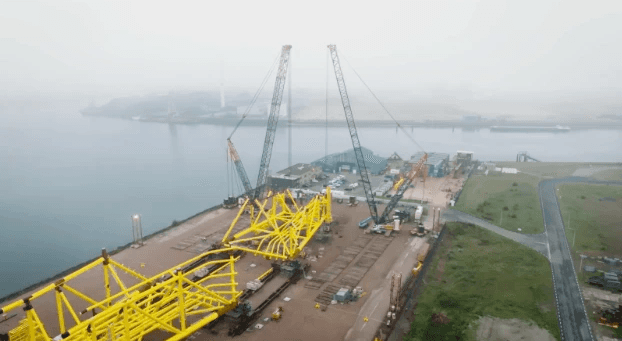
On the quays of Vlissingen and Antwerp, Smulders Group builds complex components: offshore wind jackets, transition pieces, foundations destined for decades in the North Sea. Moving them starts with a tower crane and a tower crane is only as reliable as the ground beneath it.

Suz Pathmanathan
Product Marketer
Location: the Netherlands
Date: October 2025 - December 2025
On the quays of Vlissingen and Antwerp, Smulders Group builds complex components: offshore wind jackets, transition pieces, foundations destined for decades in the North Sea. Moving them starts with a tower crane and a tower crane is only as reliable as the ground beneath it.
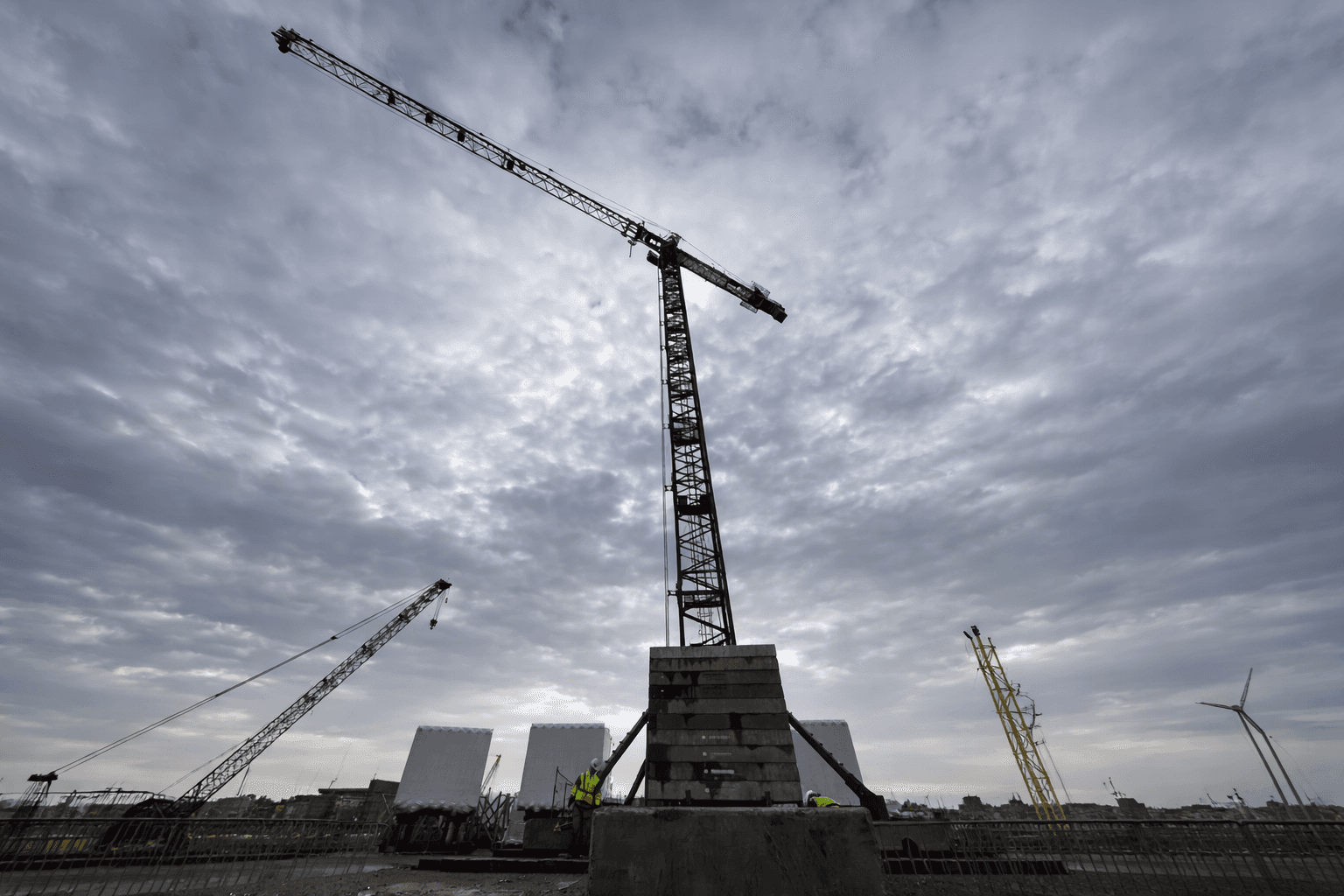
For Enigmatix, the engineering firm responsible for that ground, two jobs needed doing. The first: confirm that an existing crane operating on weaker-than-ideal soils was holding stable under daily use. The second: run a controlled load test on the subsoil itself, a heavy steel monopile laid horizontally across a foundation block, its full weight pressing down on the ground so the team could see exactly how the subsoil would respond, both at the moment of loading and in the days that followed.
In both cases, a one-off survey wouldn't cut it. What mattered was how the ground behaved continuously, under load, in real time. Subtle settlement, delayed deformation, or tilt could all change the risk picture but only if someone was watching.
Bringing It In-House
Traditionally, that kind of precision came from specialist surveyors and repeated total-station measurements. Automatic total stations could deliver the same data, but for a use case this specific, they were oversized and overpriced.
Enigmatix wanted to do it differently. Bring the capability inside the engineering team, reduce reliance on external survey crews, and get the data faster all without losing accuracy.
The Setup
The installation was simple. The TotaLite device went onto a concrete block roughly ten metres from the crane. Prisms went on all four crane bases. No separate reference point was needed, the concrete block itself was stable enough to serve as one.
Two hours from unboxing to live data delivered near real-time readings, with a five-minute delay, all flowed into the cloud dashboard.
For the load test on the new crane, the setup was repeated. Monitoring started two weeks ahead of the test to establish a baseline and capture how the subsoil behaved when no load was present. The test itself ran for 14 days and afterwards, the sensor stayed on site a further two days to capture any residual settlement once the weight was lifted.
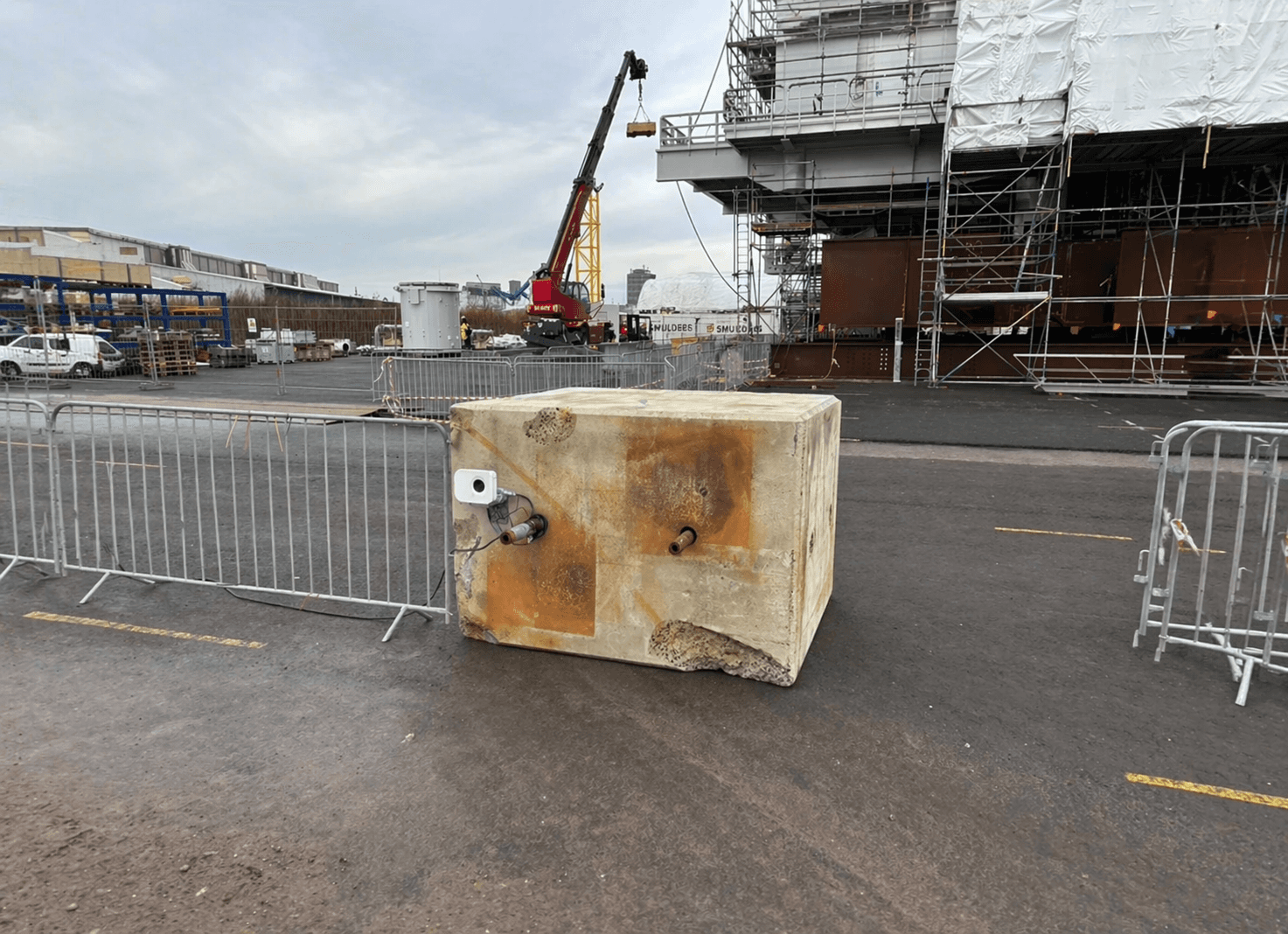
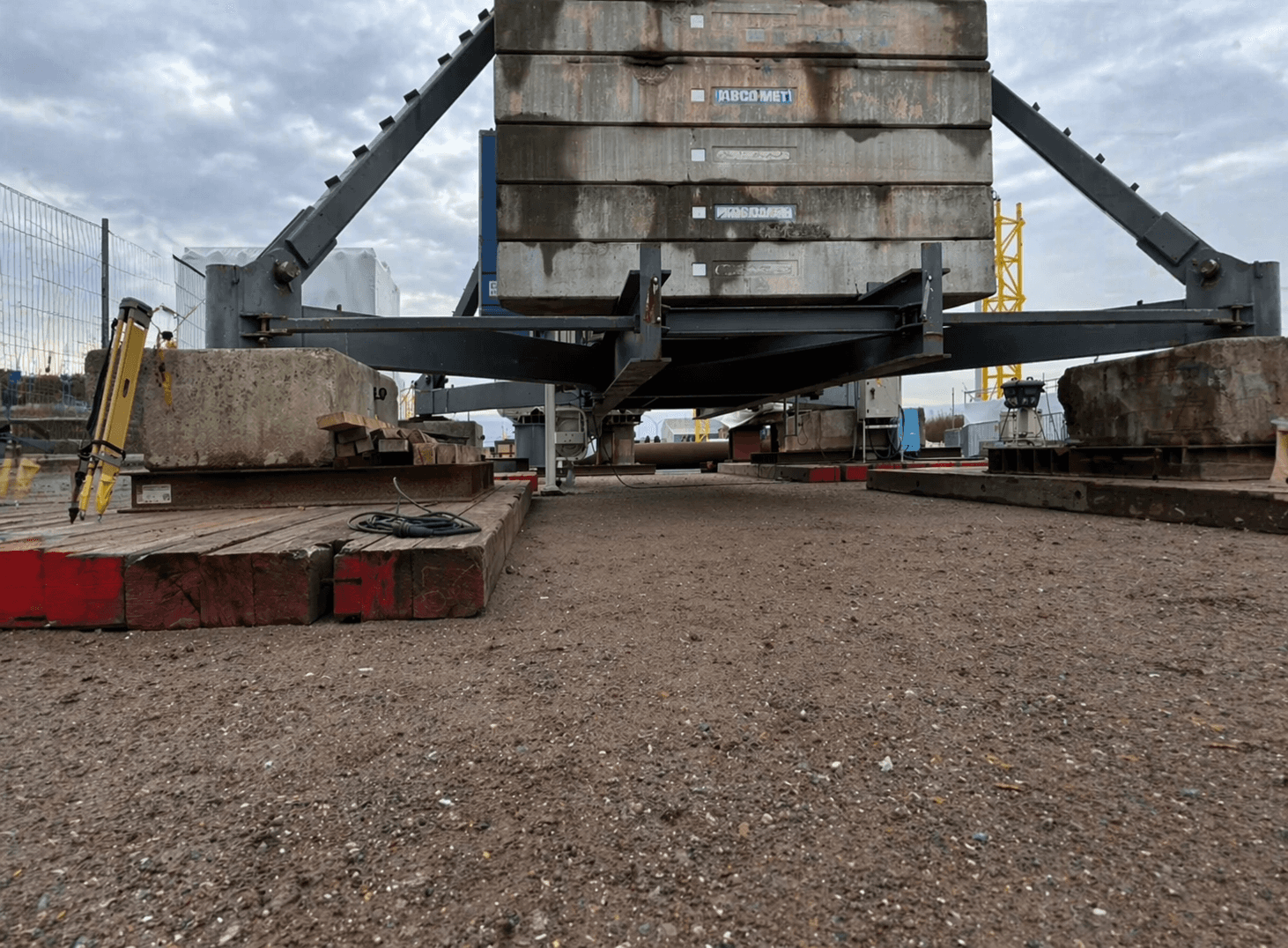
Fig 1a) Field of view on the crane Fig 1b) Crane base with four monitoring targets
What the Data Showed
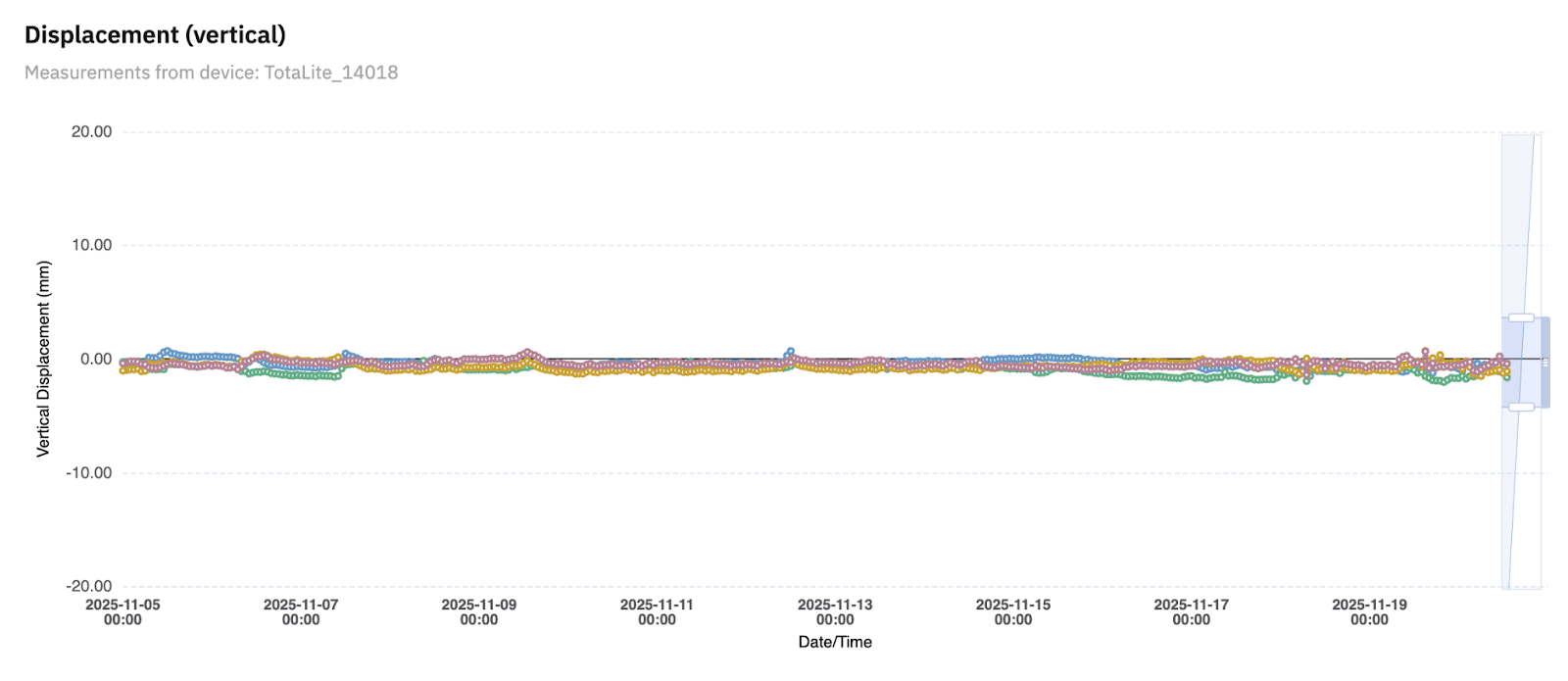
On the existing crane, the answer was reassuring. Movements stayed well below the 18 mm threshold Enigmatix had set. During lifts, the bases showed expected millimetric displacements and nothing else. No drift, no concerning trends. A crane operating on weak soils, operating safely, with the data to prove it.
The load test told a more detailed story.
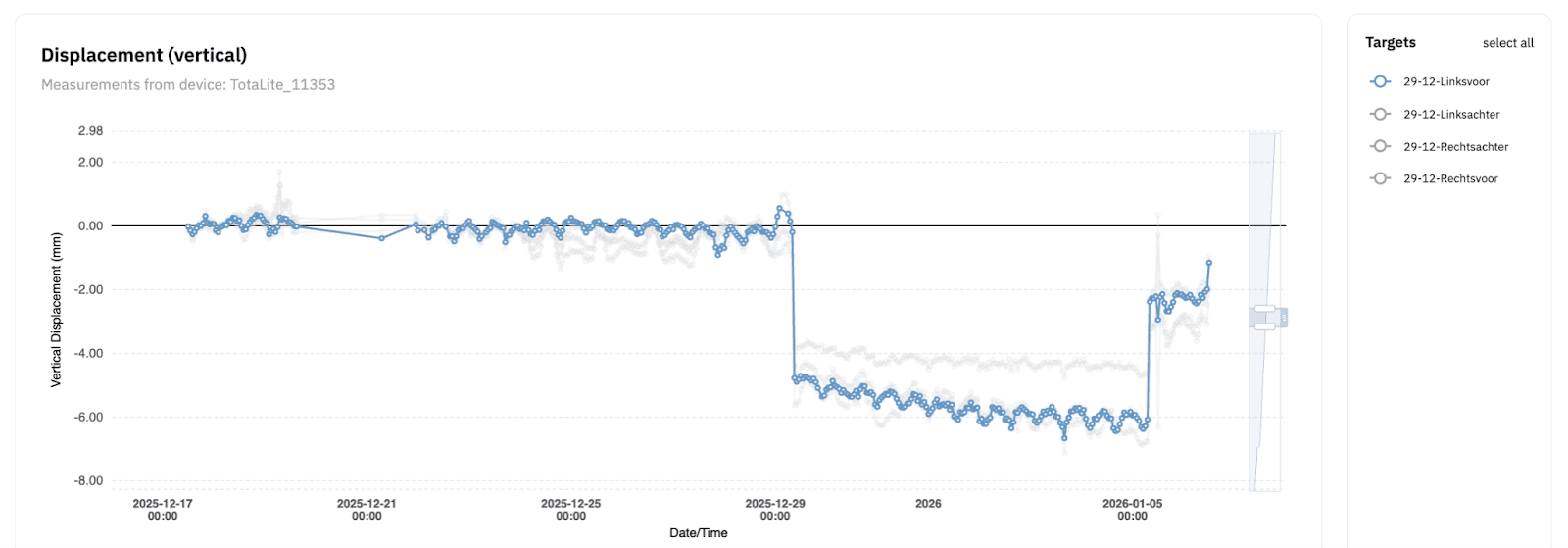
The two-week baseline revealed a clean day–night cyclic pattern in the subsoil, thermal effects that only show up with continuous data. When the load was applied, the ground dropped roughly 6 mm almost immediately. What followed was a slower drift as the subsoil continued to compress under sustained weight. When the load was removed, the ground rebounded, partial elastic recovery, the kind of behaviour that only emerges if you're watching continuously.
None of this would have surfaced from a handful of discrete measurements. It emerged because the data never stopped coming.
Results
For Enigmatix, the project marked a shift to lower overheads, faster insight, and more direct control over project risk.
The numbers mattered. What mattered more was the confidence that came with continuous visibility. Every millimetre counts when the load on the other end is an offshore wind component bound for the North Sea and knowing, not guessing, not waiting for the next surveyor visit, is what separates safe operations from lucky ones.
At a site where every lift counts and the ground offers no margin for surprise, TotaLite didn't just deliver data. It handed Enigmatix a new way of working.
Enigmatix is an engineering consultancy specialising in geotechnical and structural monitoring. The work described took place on Smulders Group's wharfs in Vlissingen (Netherlands) and Antwerp (Belgium), where offshore wind and marine infrastructure components are fabricated and handled.
Share