Back
Case Study
ATS vs TotaLite: The Mirabeau Project with Geo-Instruments
Five hundred metres below the forests of northeastern France, a facility is being built to outlast civilisation itself. TotaLite was brought in to monitor the tunnels, and to make sure every millimetre of movement was captured, continuously, without anyone needing to go underground to find out.

Suz Pathmanathan
Product Marketer
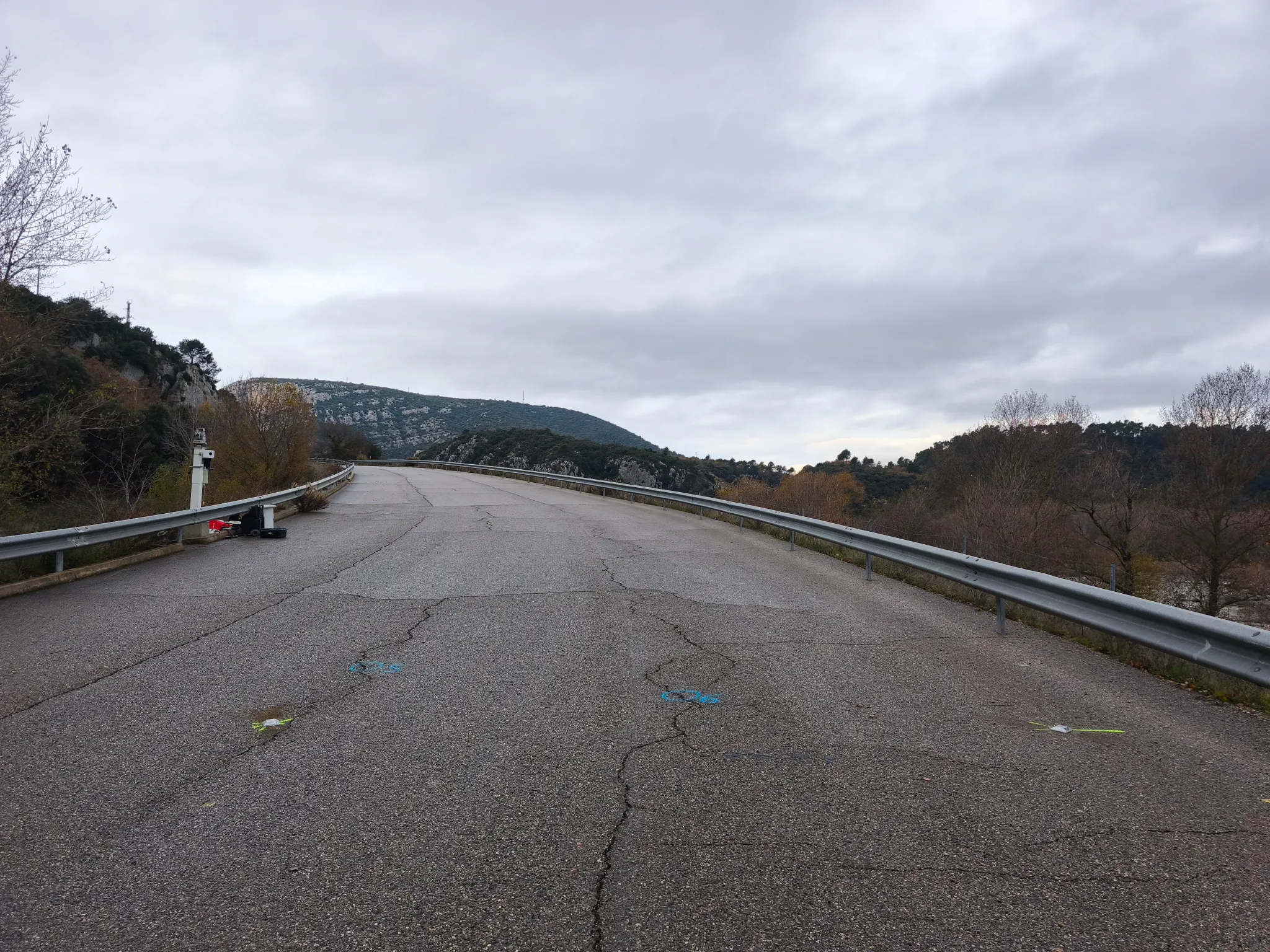
One of the most ambitious engineering projects in human history is quietly taking shape in the south of France. ITER, the international fusion energy experiment, requires an extraordinary amount of heavy equipment to reach its site. That equipment travels by road. And beneath one of those roads, a Tunnel Boring Machine was about to pass through.
Geo-Instruments was brought in to make sure the road didn't move, or more precisely, to know exactly how much it did.
The road itself was built for this purpose: dense, rock-filled bitumen, heavily reinforced, designed to carry the weight of ITER's oversized convoys. Drilling into it was hard work. That was reassuring.
What wasn't as reassuring was the weather.
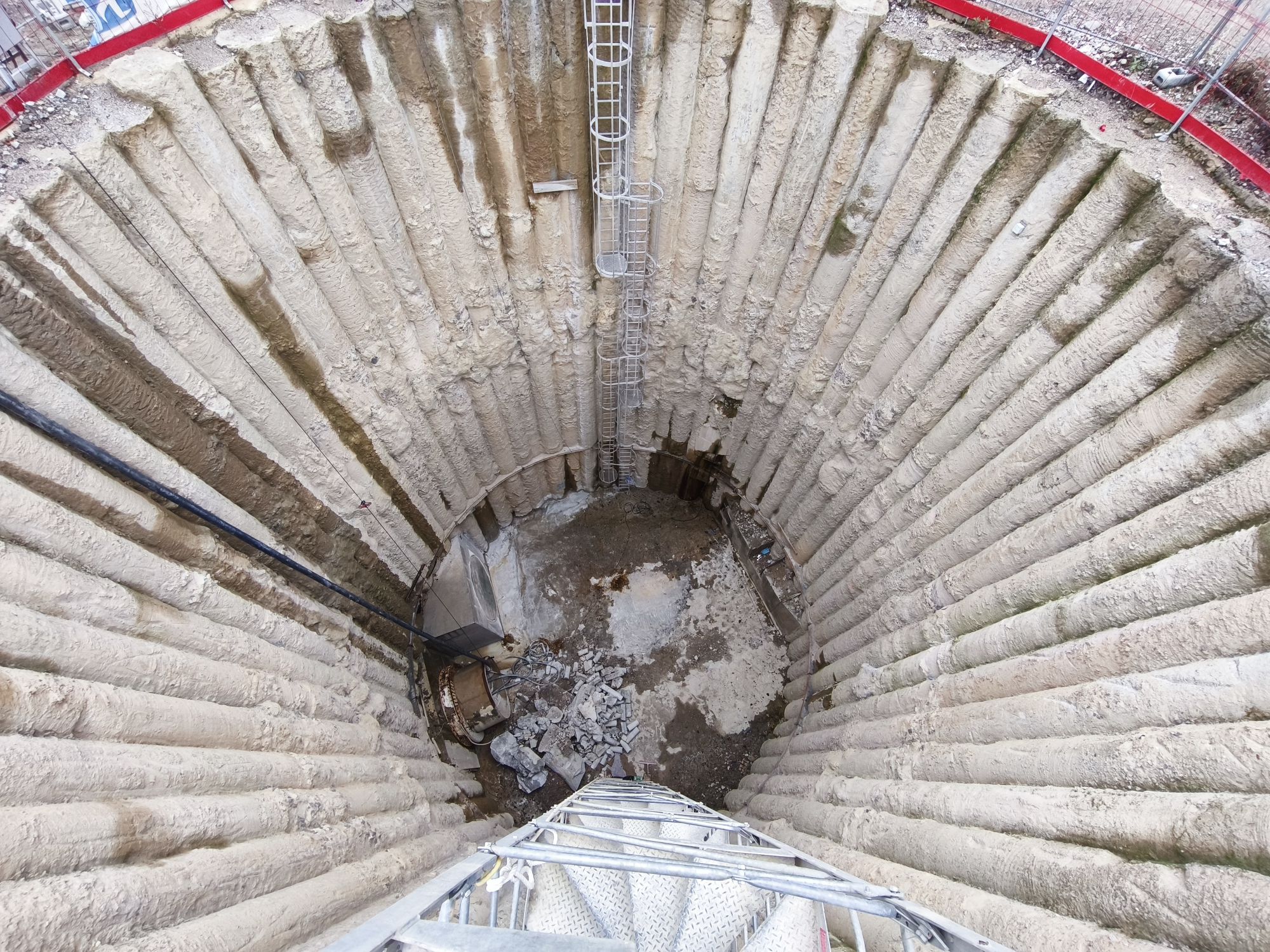
Controlled Execution
The Mirabeau site in winter is not a forgiving place. Nestled near a river, the monitoring team arrived each morning to black ice, dense fog rolling off the water, and humidity that hovered at almost 100% day after day. On a good day, the sun would break through for two or three hours. Most days, it didn't.
Water collected on the road prisms and refused to drain. Fog deposited droplets on every surface even when it wasn't raining. For instruments that rely on optical clarity, this was about as bad as it gets.
"We rarely have conditions this bad for such an endeavour," noted Julien Lextrait, lead engineer at Geo-Instruments.
The Automated Total Station (ATS) was challenged by its conditions; the environment was simply relentless. Intermittent gaps appeared in the data. That was expected. What mattered was whether the TotaLite sensor would hold up the same way.
Running the Comparison
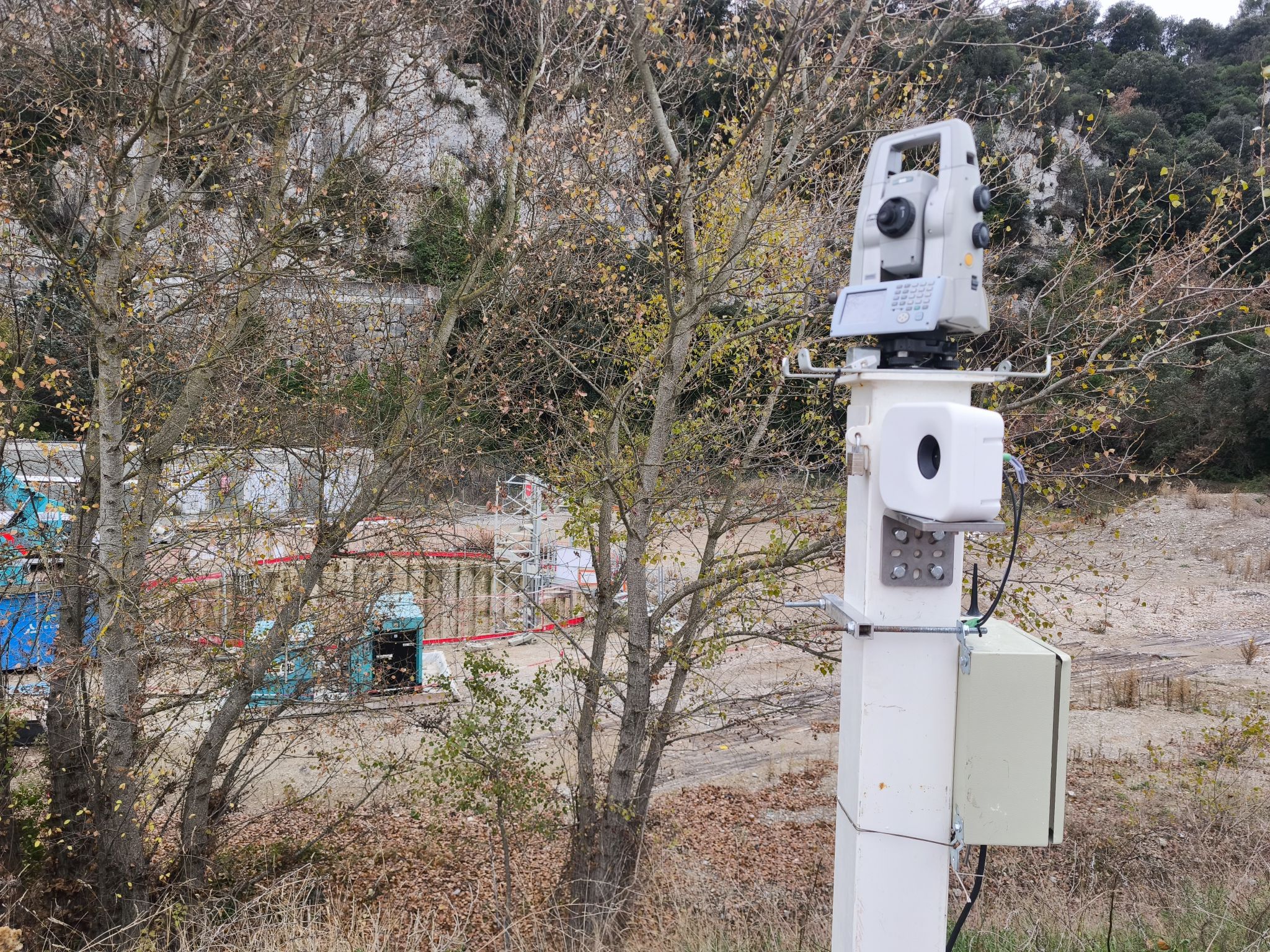
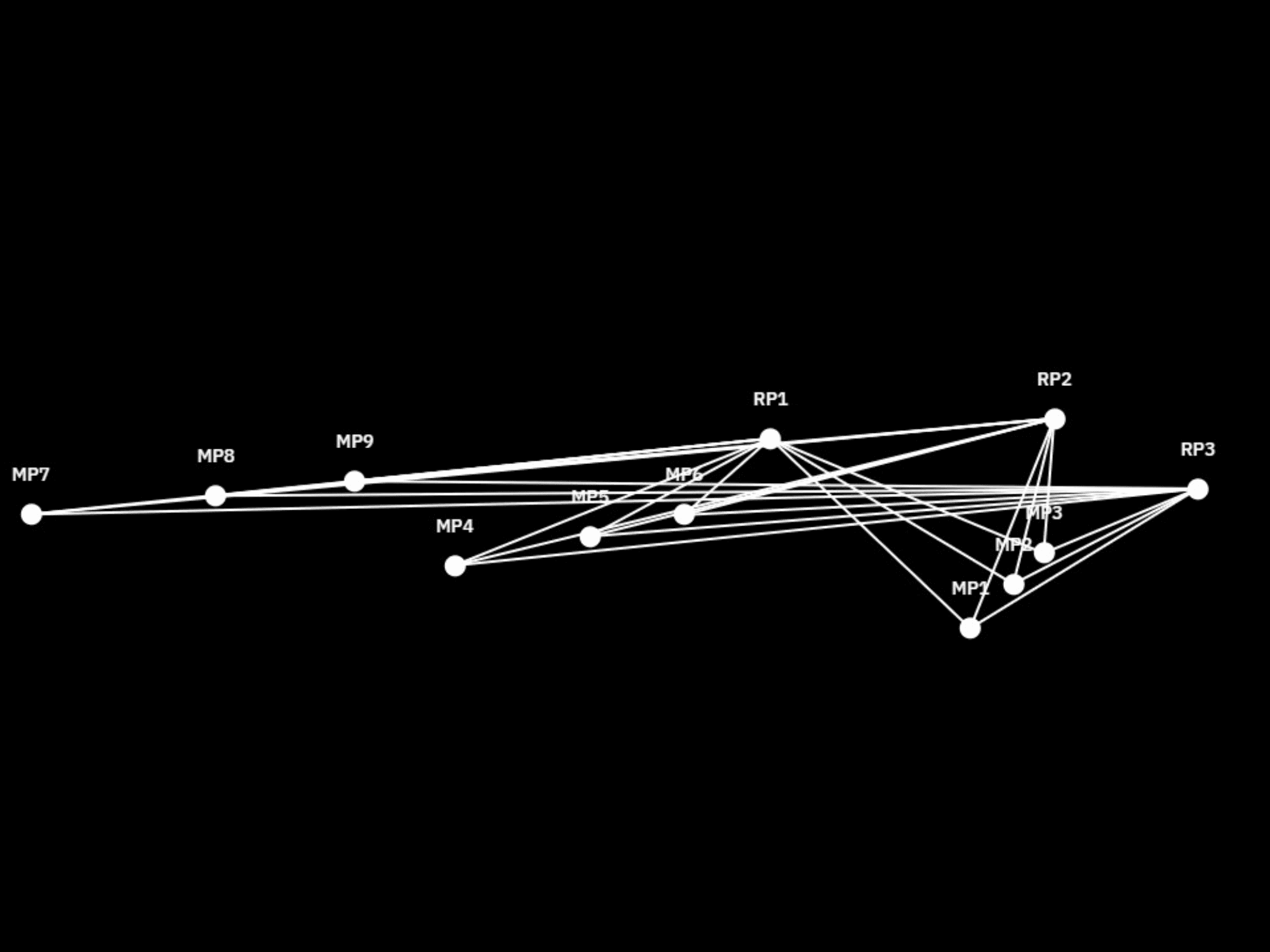
The TotaLite sensor was mounted directly onto the ATS tower bracket; a 150 kg concrete base anchored into the road sharing the same rigid steel column as the ATS. Eight reference targets were positioned across the site, several of them fixed to rock faces more than 80 metres away, giving the team high confidence in the absolute accuracy of their ATS readings. This was a robust benchmark. If the TotaLite data could match it, that would mean something.
Over the course of the monitoring period, the TBM passed beneath the road. The instruments watched. The data came in despite inclement weather conditions.
What the Data Showed
In the end, the road moved 1.5 mm. That's it. A road built for fusion energy convoys, monitored through a brutal winter, settled by less than the width of a fingernail.
More importantly: the TotaLite sensor recorded exactly the same thing as the ATS.
The comparison graphs told a clear story. Lines for the ATS and TotaLite running almost on top of each other across the full monitoring period. Data gaps appeared at the same moments, caused by the same weather events. Similar movements were recorded while data interruption periods were of the same length.
No filtering or chasing down anomalies. Just data that matched a premium instrument, in conditions that had pushed both to their limits.
The graph below shows TotaLite's measurements in isolation across the full monitoring period.
Results
For Geo-Instruments, the conclusion was straightforward: "For leveling with such requirements, TotaLite works just as well as an ATS in wet conditions".
But the implications go further than a single site comparison. What the Mirabeau project demonstrated is that robust outdoor deformation monitoring doesn't have to mean heavy infrastructure and complex logistics. The TotaLite sensor: compact, simply installed, and connected through the TotaLite.io platform, delivered data that stood shoulder to shoulder with one of the most capable instruments in the field.
The V2 wiper was no small part of that. In conditions where water accumulation is relentless, repeatability depends entirely on optical clarity. The wiper did its job, quietly and consistently, throughout the campaign.
At a site where the stakes were high, the conditions were extreme, and the benchmark was unforgiving, the TotaLite sensor didn't just perform. It proved itself.
Geo-Instruments is a specialist geotechnical and structural monitoring company. The Mirabeau project was conducted in support of infrastructure works associated with the ITER fusion project in southern France.
Share