Why Rising Fuel Costs Are Making the Case for Continuous Deformation Monitoring
By
Diana Mounter

There's a cost hiding in plain sight on monitoring projects across Europe. It's a budget assassin that doesn't show up on equipment hire invoices. It rarely gets its own line in a project spreadsheet. But it's real, it's recurring, and right now it's getting more expensive every time someone fills up a van.
We're talking about mobilisation.
Every manual monitoring reading requires someone to physically get to site (usually red-eyed and pre-caffeinated). So in terms of resources, we’re talking a vehicle, fuel, travel time, and the aforementioned bleary-eyed operative. On a project with weekly visits over a twelve-month monitoring period, that's 52 trips. Multiply that across multiple monitoring points, remote sites, or projects with restricted access windows, and what looked like a routine operational cost starts to look like a significant one, particularly now that diesel fuel prices in Europe have jumped sharply in early 2026, with the construction sector among the industries most exposed to fuel price volatility.
This isn't a new problem. But thanks especially to recent events, it's becoming a more urgent one.
The infrastructure challenge nobody wants to talk about
While mobilisation costs have been quietly climbing, Europe's infrastructure has been quietly ageing. A bit like all of us actually.
The bridges, tunnels, retaining walls, and embankments built during the postwar construction boom are approaching or exceeding their design lifespans. Replacing them all is neither financially nor practically feasible: EU infrastructure investments increased by approximately 1% in 2025, and while Germany has introduced a €500 billion plan for infrastructure and climate investments, the scale of what needs maintaining far outpaces what can be replaced.
The answer, increasingly, is to monitor rather than replace. To understand exactly how a structure is behaving - whether it's stable, slowly deforming, or showing early signs of distress - and make evidence-based decisions about maintenance, intervention, or continued service.
That sounds straightforward. In practice, it has historically come with a significant catch.

The monitoring gap
Continuous, reliable deformation monitoring has long been side-eyed and sighed about. Due to its oftentimes sky-high costs, it has often been reserved for high-budget projects. Automated total stations, the gold standard for precision monitoring, deliver excellent data but they’re also expensive to procure, complex to install, power-hungry, and require specialist maintenance. On projects where budgets are tight or access is constrained, the result is often periodic manual monitoring instead: a site visit every week or two, a set of readings, and a gap in between where anything could be happening.
For structures that move slowly and predictably, that gap is manageable. For structures near active construction, in geologically complex ground, or subject to dynamic loading - tunnels near excavation works, embankments above TBM drives, bridges carrying heavy freight - it isn't.
The monitoring events that matter most tend to happen between site visits when you aren’t there.
What continuous monitoring actually looks like now
This is where things have changed meaningfully in recent years.
Compact optical sensors such as TotaLite can now be deployed in under an hour, run on as little as 0.3W - enough for battery or solar-powered operation - and transmit continuous sub-millimetre displacement data remotely, without anyone needing to go anywhere, giving time and effort back to specialists.
The implications are straightforward. No mobilisation cost. No data gaps. No dependency on access windows, daylight hours, or site closures. And monitoring project costs reduced by up to 40% compared to conventional approaches.
For engineers working on projects where access is genuinely constrained, underground environments, live infrastructure corridors, remote slopes, this isn't a marginal improvement. It's a different category of solution.

Click to watch our webinar on hear how continuous movement monitoring is changing the surveying landscape.
Tested where it counts
In early 2025, monitoring specialists Geo-Instruments deployed TotaLite alongside an automated total station on infrastructure works associated with the ITER international fusion energy project in southern France. The brief was a direct benchmark: same targets, same monitoring period, same demanding conditions.
Those conditions were what the British call “rubbish”. Near-100% humidity. Persistent fog. Black ice. And a Tunnel Boring Machine passing directly beneath the monitored road, the kind of dynamic event that tests any monitoring system's ability to capture fast-moving deformation accurately.
Both systems recorded almost identical data throughout.
For engineers evaluating whether continuous optical monitoring is a credible alternative to traditional methods in demanding environments, that result matters. Not because it replaces judgement, it informs it. Continuous data doesn't make decisions; it makes the people making decisions better equipped to make them.
The bigger picture
Europe spends nearly €400 billion each year on fossil fuel imports, and recent geopolitical instability has pushed energy costs higher across the continent. For the construction and monitoring sector, that pressure is direct and immediate, every kilometre driven to a monitoring site costs more than it did two years ago.
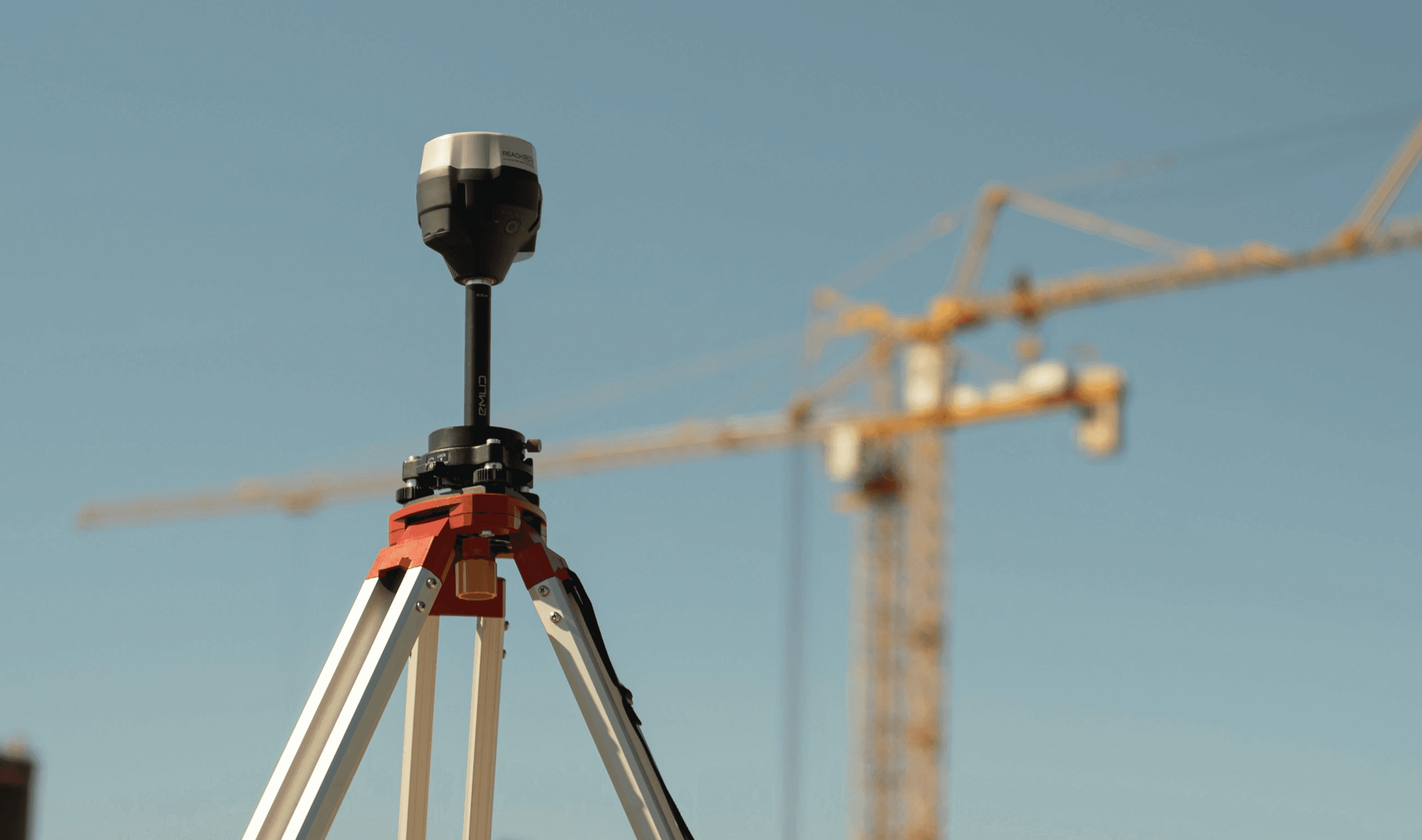
But the more important shift isn't about fuel. It's about what continuous remote monitoring makes possible on projects where the data has historically been intermittent, expensive, or simply absent.
Ageing infrastructure that needs to be understood, not replaced. Projects in environments where access is limited. Monitoring budgets that need to stretch further without sacrificing data quality. These aren't niche problems. They're the everyday reality of geotechnical and structural monitoring across Europe right now.
Continuous deformation monitoring used to be a premium option. Increasingly, it's the practical one.
Want to see the data for yourself?
🔗 Book a demo and see how TotaLite performs on projects like yours.